
First Job Interview: Questions, Tips and Examples
Your first interview can feel intimidating, but preparation makes it much easier. This guide explains what usually happens, the questions to expect, and how to answer them clearly.
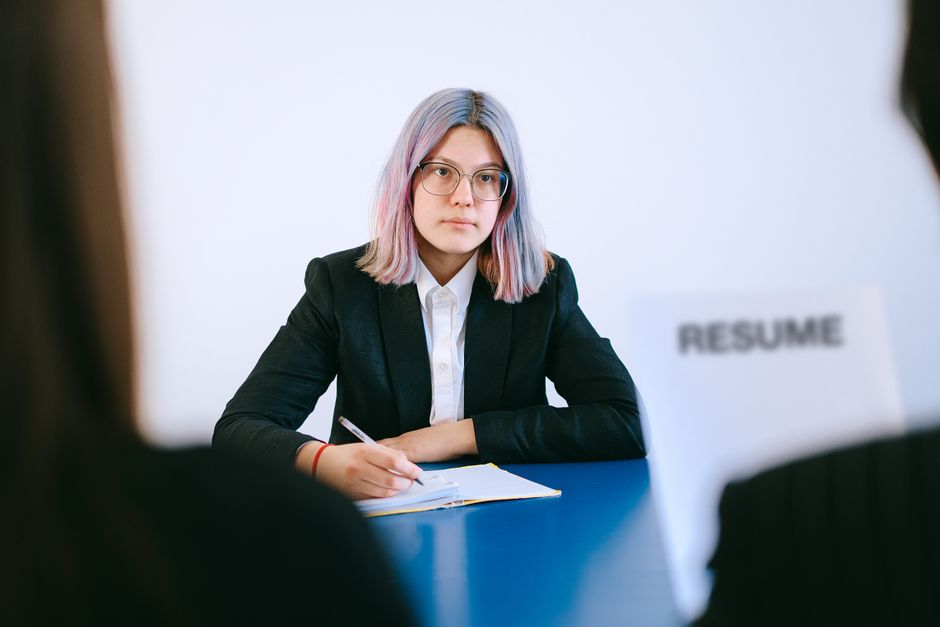
What actually happens in a first interview
A first interview is usually a conversation, not an exam. The interviewer wants to check three things: whether you can do the basics of the job, whether you are motivated, and whether you would be comfortable to work with.
For an entry-level role, most employers do not expect perfect answers. They expect honesty, a clear way of speaking, and some evidence that you have thought about the job.
Formats vary. It might be a short phone call, a video call, a one-to-one meeting, or a panel with two or three people. Ask the recruiter in advance what to expect, including the length and the format.
The questions beginners hear most
Some questions come up again and again. You do not need a script, but it helps to have thought about your answers once before the day.
| Question | What they usually want to know | How to approach it |
|---|---|---|
| Tell me about yourself. | Can you summarize yourself clearly? | A short story: who you are, what you studied or did, why this job. |
| Why do you want this job? | Are you genuinely interested? | Connect the role to something real: the tasks, the company, your goals. |
| What are your strengths? | Do you know yourself? | Pick two strengths and give a small example for each. |
| What is your weakness? | Are you self-aware and honest? | Name a real one and say what you are doing about it. |
| Why should we hire you? | Can you make a simple case for yourself? | Focus on fit and willingness to learn, not on being the best. |
| Do you have any questions? | Are you serious about the role? | Always have two or three ready. |
You may also get practical questions: your availability, whether you can travel, or what you know about the company. Read the job ad carefully and check the company website for ten minutes.
You must have a perfect answer to every question.
Interviewers expect some nervousness from beginners. A thoughtful, honest answer is better than a memorized speech that sounds unnatural.
A simple way to structure your answers
When you are nervous, structure helps. A common approach is to give a short answer first, then one concrete example, then a sentence linking it back to the job.
- Answer directly in one sentence.
- Add one short example from study, work, volunteering or a project.
- Say what you learned or what you would bring to this role.
- Stop there. Let the interviewer ask follow-up questions.
"I'm [Name], and I recently finished [course or degree] in [subject]. During that time I did [project, internship or part-time job], where I mainly worked on [task]. I'm now looking for a first full-time role where I can build on that, and [Company] caught my attention because of [specific reason]."
"I want to work in [field] because [genuine reason]. In this role, the part that appeals to me most is [specific task from the job ad]. I know I would need to learn [skill] quickly, and I'm ready to do that."
Preparation does not remove nervousness, but it gives you something solid to hold on to when it appears.
How to prepare in the days before
You do not need weeks of preparation for a first interview. A few focused hours are usually enough, especially if you spread them over two or three days.
- Re-read the job ad and highlight the tasks and skills they mention most.
- Look at the company website: what they do, where they are, and any recent news.
- Write short notes for five likely questions, in your own words.
- Prepare two or three questions to ask them at the end.
- Check the location or the video link, and plan your route or setup.
- Choose clothes that are neat and appropriate for the company. When in doubt, slightly more formal is safer.
- Print or save the job ad and your notes where you can see them.
What to do during the interview
Arrive or join the call a few minutes early. Greet the interviewer by name if you know it, and keep your answers to a reasonable length, roughly half a minute to a minute for most questions.
If you do not understand a question, ask politely: "Could you say a bit more about what you mean?" That is normal and much better than guessing.
It is also fine to pause. A short silence while you think shows composure, not weakness.
"What would a typical first month look like in this role?"
"What kind of training or support is available for someone starting out?"
"What are the next steps in the process, and when should I expect to hear back?"
Common mistakes and how to avoid them
You should say yes to everything and hide any weakness.
Interviewers usually notice when something does not add up. Admitting you are still learning a skill, and showing how you plan to improve, often builds more trust.
- Speaking too long without stopping. Aim for short answers and let them ask more.
- Criticizing a previous teacher, employer or colleague. Keep it neutral.
- Saying "I'm just looking for any job." Show why this job interests you.
- Checking your phone or looking away often. Put the phone away completely.
- Having no questions at the end. It can suggest low interest.
- Inventing experience. It is easy to get caught and hard to recover from.
After the interview
It is common, though not required everywhere, to send a short thank-you message within a day. Keep it brief and mention something specific from the conversation.
"Dear [Name], thank you for taking the time to speak with me today. I enjoyed learning about [specific topic] and I'm still very interested in the [job title] role. Please let me know if you need anything else from me. Best regards, [Your name]"
If you do not hear back by the date they mentioned, one polite follow-up is reasonable. Then keep applying elsewhere. Waiting for a single answer is the slowest way to find a job.
Whatever the outcome, write down the questions you found hard while they are fresh. Your next interview will be easier because of it.

Frequently asked questions
How do I answer "tell me about yourself" with no work experience?
Talk about your studies, projects, volunteering or part-time jobs, and connect them to the role. Keep it to about half a minute and end with why you are interested in this job.
What should I wear to a first interview?
It depends on the company and the country. Neat, simple clothing that is slightly more formal than everyday wear is usually a safe choice. If unsure, ask the recruiter.
Is it okay to be nervous?
Yes, almost everyone is. Interviewers expect it, especially from beginners. Slow down, breathe, and remember that a short pause is completely acceptable.
Should I bring anything to the interview?
A copy of your CV, the job ad, and a notebook with your questions are useful. For online interviews, test your camera, microphone and internet connection beforehand.
How long should my answers be?
Usually around 30 to 60 seconds per question. Give the key point and one example, then stop and let the interviewer ask follow-up questions.
What if I don't get the job?
It happens to almost everyone, including experienced people. Ask for feedback if the employer offers it, note what you would do differently, and keep applying.
A first interview is mostly about showing up prepared, speaking honestly and being easy to talk to. Learn the common questions, prepare a few short examples, and have your own questions ready. You will not control the result, but you can control how well you prepare, and that gets easier with every interview.
Ready to apply?
Browse jobs and freelance projects from many sources in one place.
Written with AI assistance and meant to inform. Check important details (laws, deadlines, amounts) with official sources or a professional.